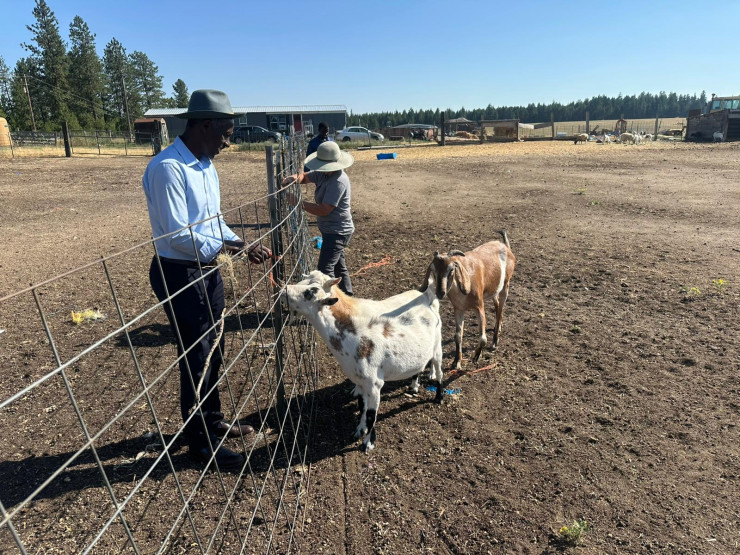
The Rotary Club of Global Actions for Refugees and Forced Migrants kicked off a community farming initiative in Spokane—turning open ground into productive rows that will help refugee and migrant families grow fresh food, build income opportunities, and share farming knowledge from home.
Why a community farm?Newcomers often arrive with strong agricultural experience but limited access to land. A shared, well-supported site provides:
-
Food security: Fresh produce lowers grocery costs and improves diet diversity.
-
Income pathways: Surplus can be sold at local markets or via CSA shares.
-
Community & wellbeing: Working the soil together reduces isolation and builds local connections.
-
Site prep: Volunteers shaped rows, added organic matter, and mulched beds with straw to retain moisture and suppress weeds.
-
Water: We tested irrigation and mapped zones to ensure even coverage and reduce runoff.
-
Training: A hands-on orientation covered soil health basics, safe tool use, and a simple crop-rotation plan.
-
Planning: Families signed up for plot access and a seasonal calendar (soil prep → planting → harvest → fall cover crops).
-
Soil health first: Compost additions, minimal till, deep mulching, and living cover crops between seasons.
-
Smart water use: Timed irrigation; mulched aisles to reduce evaporation; rain-capture options under review.
-
Crop plan: Quick wins (greens, herbs, radishes), summer staples (tomatoes, beans, squash), and culturally familiar varieties suggested by participants.
-
Shared tools & storage: A central tool bank with safety checks and a simple sign-out log.
-
Beds are prepared and assigned; irrigation zones are functioning; training sessions scheduled.
-
Next milestones: seedling starts, pest-management workshop, and a first community harvest day.
-
Data we’ll track: number of participating households, kilograms harvested per plot, estimated grocery savings, training attendance, and volunteer hours.

Recent Success Stories
-
Restoring Lives
Thu Sep 2021 -
Health assistance
Thu Sep 2021 -
Community Farm Launch
Mon Sep 2021